
What the Berkeley County Current Owner Record Shows
Berkeley County's assessment roll is the sensible first stop for an owner lookup. Each parcel record carries an owner field. That field names the party responsible for assessment and tax administration. The same record lists a mailing address for tax bills. That address may not match the situs address of the property itself. Read both fields together. Note the parcel number too. Owners with similar names and nearby lots are easy to confuse. Remember that a roll entry reflects administration, not a legal opinion. A later deed may be waiting to be recorded.
| Owner of Record | Name shown in the assessment roll for the parcel |
|---|---|
| Vesting / Tenancy | How co-owners or an entity hold title, as stated in the deed |
| Mailing Address | Destination for assessment and tax notices |
| Situs Address | Location used to identify the real property |
| Deed Reference | Instrument or book/page that records the conveyance |
| Ownership Since | Date of the deed that most recently vested the interest |
The roll answers one question only. It names the party assessed for taxes. It does not list residents, occupants, or a building manager. The mailing address is a contact clue, not proof the owner personally receives mail there. An entity, trust, or fiduciary can hold title just as an individual can.
Read the Berkeley County Deed That Shows Current Vesting
The parcel record gives you a name and parcel number. Next, move to the Clerk's records. Berkeley County deeds are indexed online from 1945 forward. Run the owner as grantee first. Then check the legal description, execution and recording dates, and grantor. The granting language and signature block reveal the true vesting. One owner, several co-owners, a trust, or a company can all take title differently. If an online result confuses you, call the Clerk. An assessment entry is never a substitute for a title abstract.
Deeds of trust reach back to 1918. Those are security instruments, though. A deed of trust secures a loan rather than naming the fee owner. Releases and liens help explain title entries, but read them with the conveyance deed itself. For deeper history, land books from 1884 sit in the Clerk's office. They are not a full online deed index. For official coverage, review the Berkeley County Clerk electronic record search page. That page also lists the access terms.
See the MapWV assessment search for the owner and parcel fields behind a Berkeley County lookup. The fields match the state's published data.
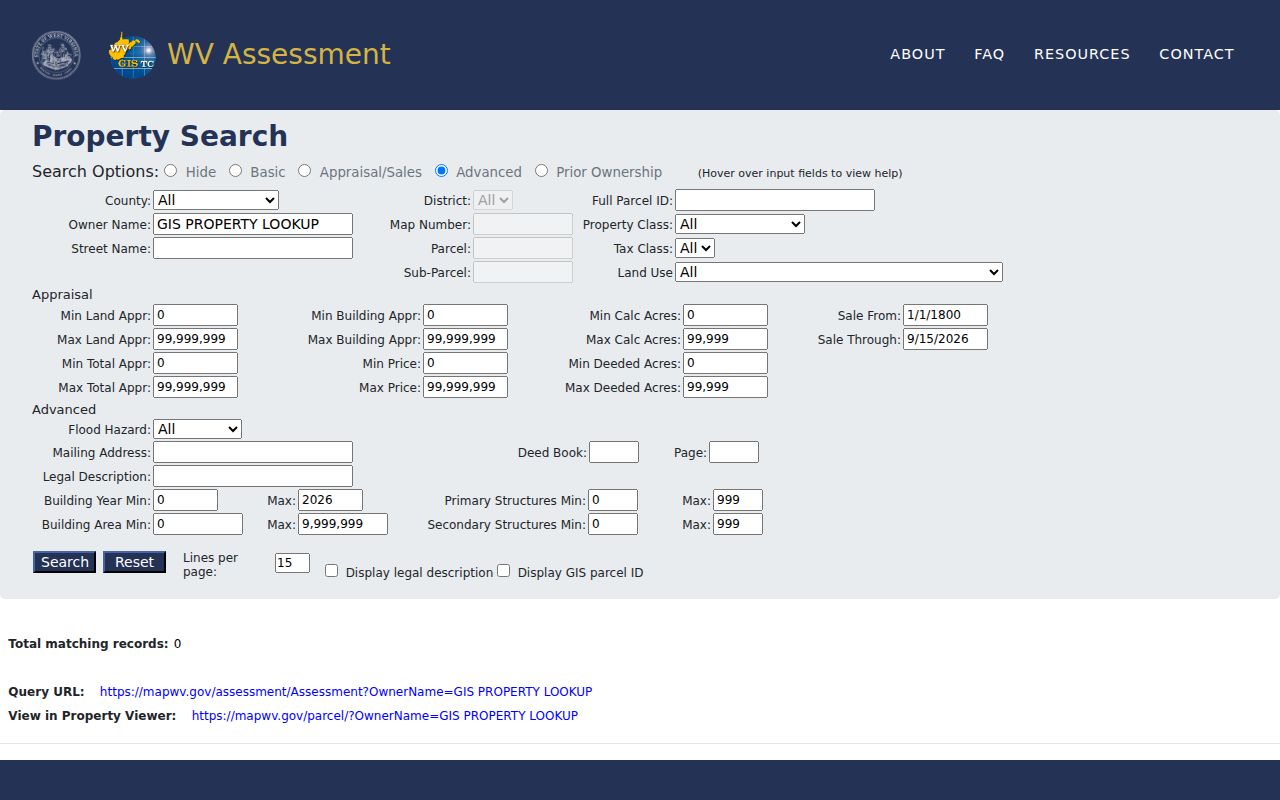
The assessment search leads to the parcel record. From there, match the owner field against the deed the County Clerk recorded.
When an Entity Appears as Berkeley County Property Owner
Sometimes the named owner is not a person. An LLC, corporation, trust, or estate can hold the title. Never assume the registered agent controls the property. The Secretary of State's business database searches by the exact legal name on the deed. A West Virginia company lookup there returns entity status, registered office, and registered agent. Those details help route a formal business inquiry. They do not amend the deed. They also cannot prove which individual calls the shots. When a Berkeley County deed names a company, use the West Virginia Secretary of State business search to confirm its legal name and public filing details.
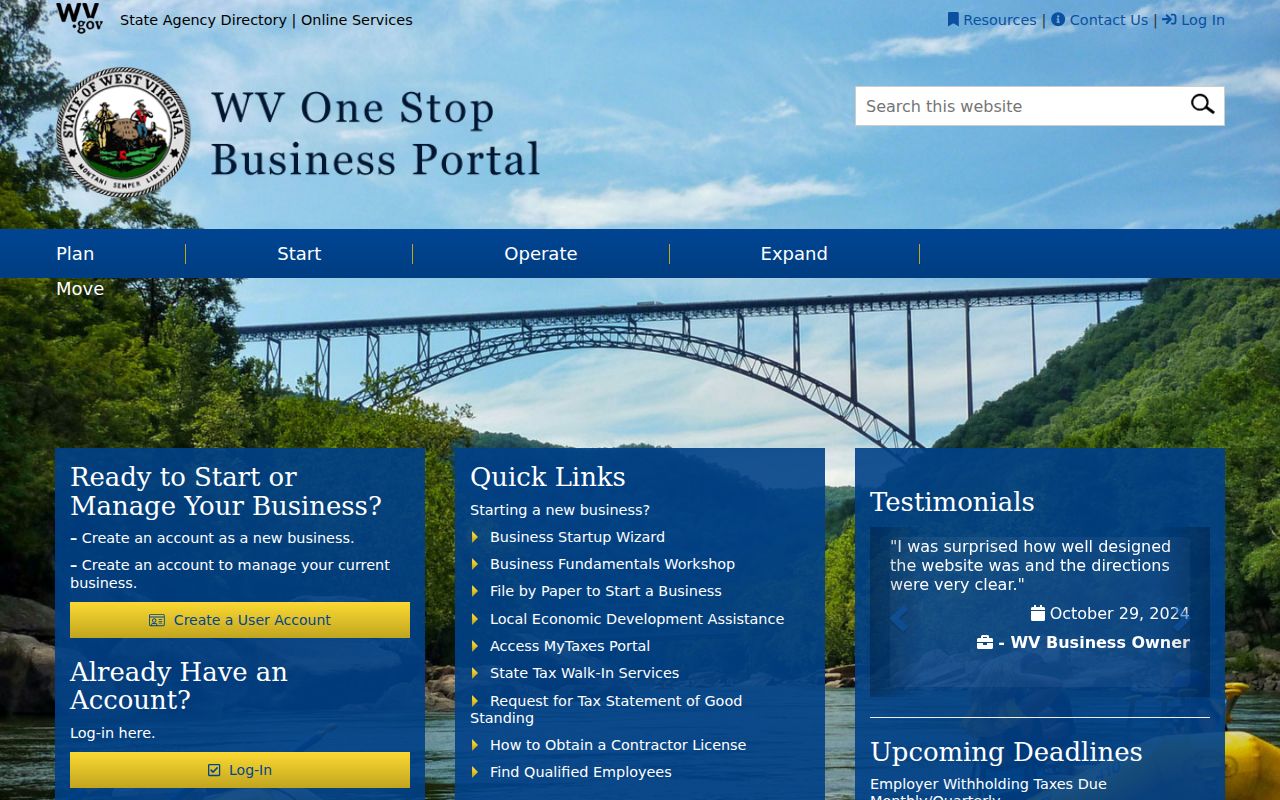
Match the entity's spelling and any assumed name against the deed exactly. Small differences matter. A trust may be identified by trustee, or by a name and date. Public filings rarely disclose every beneficiary. Estate transfers can involve both probate documents and a deed. Life estates, fiduciary deeds, and transfer-on-death provisions all make a single roll line look simple by comparison.
How Quickly Berkeley County Owner Information Changes
A deed travels a long road before it shows up anywhere. It must be delivered, reviewed, recorded, indexed, and only then reflected in tax assessment data. That sequence has a practical effect. The Clerk's newest recorded instrument can be newer than the owner name a Berkeley County property search displays. The assessor also revises parcel data as new activity comes through. Transfers, divisions, construction permits, and homestead filings all drive those updates. Maps lag even more. The county itself warns that a map change can take up to two years. For true ownership, confirm identity and legal description from the recorded deed. Do not wait for the map and tax roll to catch up.
Compare dates side by side. Set the newest deed recording date against the assessor's owner field and the tax year shown. If they disagree, work through the Clerk's index to see the conveyance sequence. Then ask the Assessor whether a roll update is pending. An address change can reroute tax mail without touching title. The opposite happens too. A freshly recorded deed can change ownership before public assessor screens reflect it.
Co-ownership complicates the picture across screens. One deed may vest title in several people, a trustee, an entity, or a fiduciary for an estate. The assessment display may show only a shortened owner label. Read the vesting language in full. Never assume a name left out of a compact search result holds no interest. When every title holder matters, pull the complete recorded instrument and any exhibit it references.
Confirming the Current Owner in Berkeley County
Confirm a Berkeley County current owner in a fixed order. Identify the parcel first. Then compare the assessment record against the recorded conveyance. This discipline avoids a name-only search that lands on a neighbor's parcel or a similarly named person.
- Search the property address or parcel in West Virginia Property Assessment and record the owner name, county, district, and parcel key.
- Search the County Clerk’s electronic deed index for the latest conveyance; match the legal description and grantee, not just the street name.
- Read the vesting clause and deed date. If an LLC or corporation is named, look up its exact name in the Secretary of State database.
- Note the tax mailing address separately from the situs address, and treat each as a record field with a different purpose.
- Owner of record
- The owner name associated with the parcel in the assessment roll or deed.
- Vesting
- The way the interest is held, such as individual, co-owner, trustee, or entity.
- Registered agent
- The business’s official service contact, not automatically its beneficial owner.
Contact the Berkeley County Office That Holds the Owner Record
Two offices hold the owner record. The Assessor maintains assessment information at 400 West Stephen Street, Suite 106, Martinsburg, West Virginia 25401, reachable at 304-264-1904 on weekdays from 8 a.m. to 5 p.m. The Berkeley County Clerk sits in Suite 103 at the same address, at 304-264-1927, for recorded deed questions. Ask each office for its current procedure before sending a copy request. Provide the parcel or instrument reference so staff pull the correct property.
Electronic access has conditions. Some Clerk access requires a signed virtual-courthouse agreement, and the county describes subscription access at $15 per month plus $1.50 for the first two pages and $1 for each additional page, with applications approved within 24 business-week hours. In-office land books and staff-assisted copy requests still work well. They are especially handy when a deed is too old or hard to locate online.
Split the duties cleanly. Use the Assessor for the name and mailing fields on a tax account. Use the Clerk for the recorded deed itself. A request to correct an assessment line never rewrites the deed; fixing a recorded instrument follows a separate legal process. Giving staff the precise parcel and instrument reference keeps those procedures from colliding.
Reaching a Berkeley County Property Owner
The tax mailing address offers a reasonable way to reach an owner about a property matter, such as a boundary concern or a document tied to the parcel. Keep any communication narrow. Identify the property clearly. Use the address only for a legitimate property-related purpose. Remember that public assessment data is not a directory of private contact details, and a home, phone, or family information should never be inferred from a business or deed record.
Lawful use. A public owner name and tax mailing address support property research and appropriate correspondence. Do not use Berkeley County records to threaten, stalk, or harass a person.