
Tracing Former Owners of a Berkeley County Property
Work from a known parcel, not a surname. The Berkeley County assessment record gives the owner name, parcel identifier, and situs address. The Clerk's index links that record to deeds and related instruments. Online coverage has firm limits. Deeds run from 1945 forward. Deeds of trust start in 1918, liens and judgments in 1998, and releases in 1992. County land books at the Clerk's office reach back to 1884, so an absence online never proves that a prior owner or conveyance did not exist.
| Source | Years It Covers | Where Held | What It Shows |
|---|---|---|---|
| Berkeley County Clerk online index | Deeds 1945 onward | Electronic Record Search | Recorded grantors, grantees, dates and instruments |
| Clerk’s land books | Available in office from 1884 | Clerk, Suite 103 | Older book entries and ownership references |
| Recorded plats | By filed subdivision or survey | Clerk and GIS map context | Lot layout, plat name and legal-description clues |
| Assessment and tax rolls | Current and recent roll years | Assessor / Sheriff | Owner fields and parcel identity, not a deed chain |
For a modern transfer, open with the recorded deed. The assessment roll confirms you have the right parcel. An older chain needs a bridge. Use the prior-owner reference in the current deed to enter the books. A plat matters when land was subdivided or a lot number changed. Tax rolls suggest who was assessed in a given year, but they support the story rather than prove legal title on that date.
The Berkeley County Clerk's electronic record search page covers deeds online and older land books in the office.
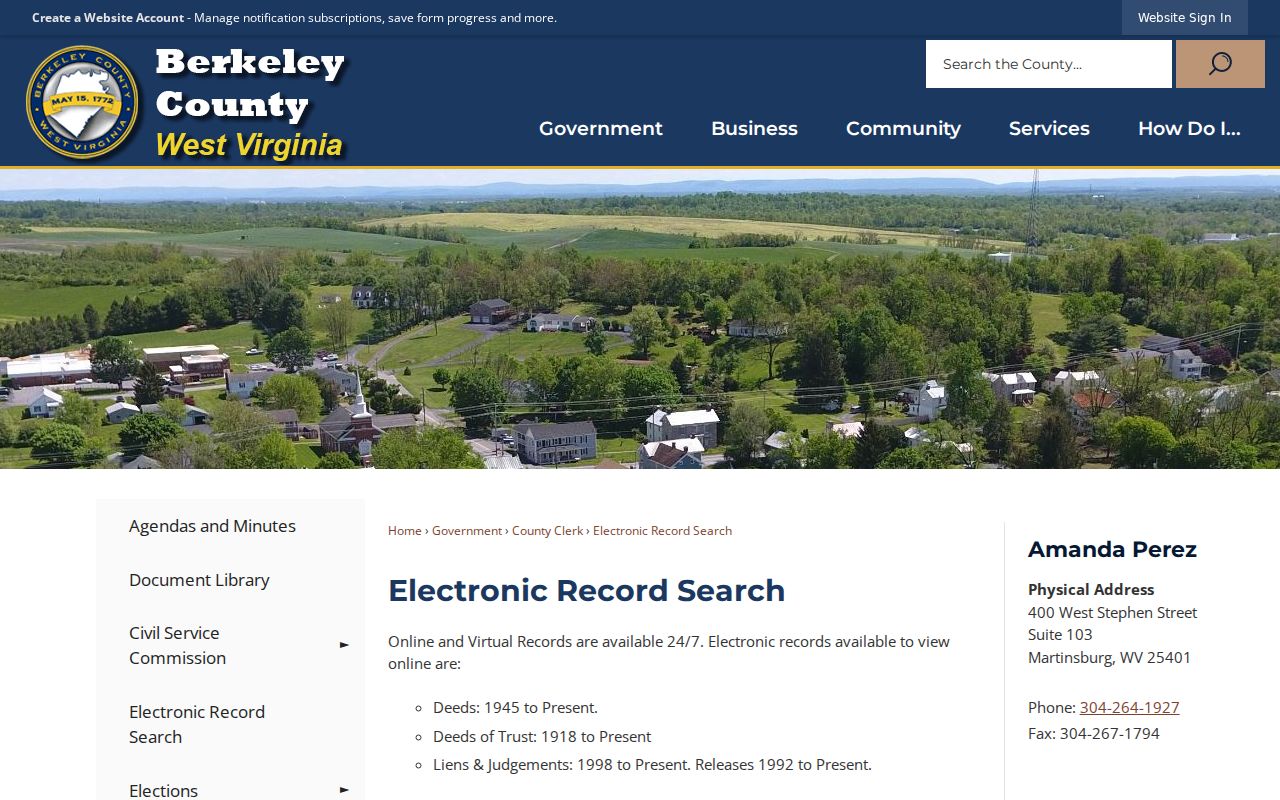
The Clerk's own description separates online deed coverage from the older land books kept at the courthouse office.
Follow Berkeley County Grantors and Grantees Backward
Begin with the current owner's acquisition deed. The buyer appears as grantee. The seller appears as grantor. Search that prior owner as grantee in an earlier instrument, confirm the legal description matches, and repeat the process. Names shift across initials, middle names, married names, corporate suffixes, and spellings, so every step needs parcel-level confirmation. The result is a sequence of indexed records, not a certified title opinion.
Keep each link in its chronology. Never let the newest name overwrite an earlier one. Record the deed date and the recording date separately, since an instrument can be executed long before it is filed. Note what the deed conveys. A full fee, a partial interest, an easement, and a life estate each change what the next record means. When the current deed cites an older book and page, treat that reference as the starting clue for the preceding conveyance.
Walking the Berkeley County Deed Chain Backward
In the Berkeley County Clerk index, trace the grantee in the newest deed to the grantor on the transfer just before it. Repeat by party name and instrument year. Check the description at every step. Multiple candidates often surface. Separate them by district, lot, acreage, adjoining owners, and book and page rather than grabbing the first surname match. A chain built this way is a research aid. When a formal opinion is needed, a title professional must review exceptions and competing claims.
- Locate the latest Berkeley County deed using the current owner name and parcel description.
- Record its grantee, grantor, instrument date, recording date, and legal description.
- Search the prior grantor as a grantee, then compare tract, lot, district, and boundary references.
- Continue until the index reaches its coverage limit; ask the Clerk about land books for earlier entries.
- Grantor / grantee
- The conveying party and the party receiving the interest in a deed.
- Chain of title
- The ordered succession of recorded ownership interests.
- Legal description
- The land description tied to the recorded instrument, often more stable than a street address.
Match Historic Berkeley County Deeds to Today’s Parcel
Older Berkeley County deed books rarely carry a modern street address. A historic instrument may name a district, a tract, a watercourse, adjoining owners, a metes-and-bounds call, or a lot in a recorded plat. Match those details against the current deed's description. Later surveys and subdivision filings help too. Suppose an old owner held several nearby tracts. A familiar surname alone cannot show which one was conveyed. Keep notes on book and page, instrument number, names, acreage wording, and adjoining boundaries so a later search can retest the same parcel.
Martinsburg research adds its own wrinkles. The town's original development and later industry help explain shifting street names and recorded lot references. Context never substitutes for the deed description itself. Land books build a useful chronology. They are not a modern indexed conveyance. When an old volume is hard to read or cross-reference, ask the Clerk about in-person procedures and copy options before traveling.
A property may have been divided, combined, or known by an older lot number before it gained a street address. Follow every parent-tract or plat reference in both directions. Watch whether the acreage changed at each conveyance. A modern parcel ID may cover only part of a tract described in a historic deed. That gap matters. A name match without the boundary calls can attach the wrong history to the property.
The West Virginia judiciary portal is a starting point. Use it to identify court files that may explain a Berkeley County ownership transfer.
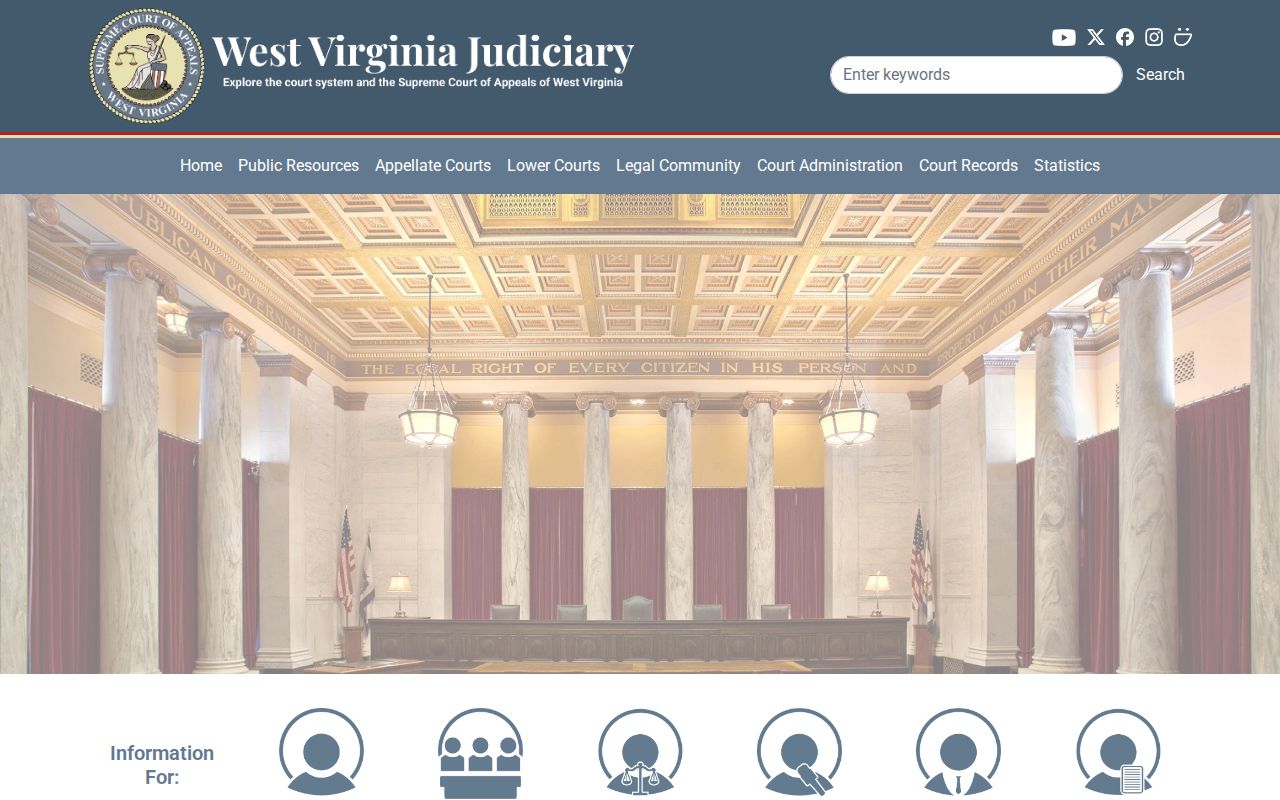
Probate, fiduciary appointments, and court proceedings can explain how an interest moved. Still check the recorded deed for the conveyance.
When Berkeley County Past Ownership Involves an Estate
A death alone does not create a deed. When a Berkeley County property passes through probate, the transfer may rest on a will, a probate order, a fiduciary appointment, or a distribution deed. Which one matters depends on the estate. Search the land record and the court record separately. Use exact name spellings and dates in both. Vital records carry their own legal access limits too. State law sets opening periods that vary by record type. A property history is not a license to bypass those limits. Nor is a public index a substitute for a full family record.
Deeds signed by a fiduciary deserve a closer look. Note whether the signer acted as executor, administrator, trustee, or guardian. Check what authority the instrument cites. Entities and trusts can linger in the title chain while the people behind them change. That explains an old puzzle. The tax roll lists one name while the deed records carry a different legal form for the same owner of record.
How Far Back Berkeley County Ownership Records Go
Ownership records in Berkeley County reach back further on paper than online. The Clerk holds land books in-office from 1884. The electronic deed index starts in 1945. Those are starting points, not promises of a clean chain. A Berkeley County property search can still hit missing references, unreadable handwriting, an incomplete legal description, or a deed recorded under a spelling variant. Before county deed books existed, land often moved by original grant or patent, and those documents may sit in state or archival collections rather than the county index. Confirm the right jurisdiction first.
When a chain stops, write down the last instrument found and the dangling reference. A title professional can then work through competing descriptions, unreleased liens, easements, or outright gaps. A county web search supports historical research and due diligence. It does not certify marketable title.
Older research goes better when the question is narrow. Do you need the prior owner at a certain date? The sequence of recorded grantees? The source of a boundary call? Each is a different task, and each may point to different books, plats, court files, or survey records. Bring the parcel number, the parcel description, and every known instrument reference to the Clerk so staff can steer you to the right index series.
Some older entries live in the courts rather than the deed books. The West Virginia judiciary portal helps identify the separate docket or office involved. The conveyances themselves stay in the County Clerk's deed records.
Lawful use. Former-owner research supports property history and due diligence. Do not use a deed chain or owner name to stalk, threaten, or harass a living person.